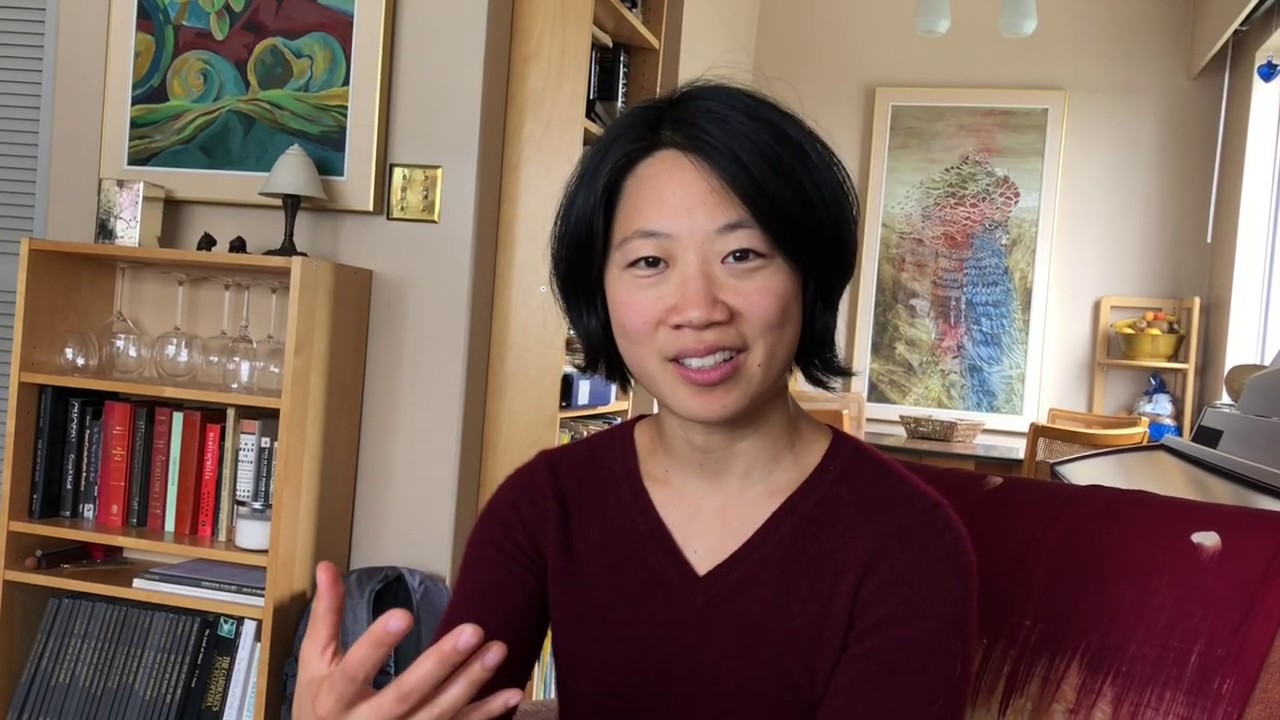
Howard and I are selecting music for our next concert. We have wanted to do a concert featuring 20th Century music which is “beautiful” for some time now and we are finally getting down to it. When thinking of 20th century music (specifically music written for the Symphony or Recital hall where Classical music fans hang out) you might think of the cacophonous and discordant sounds of 20th century greats such as Bartok, Schoenberg and Stravinsky. Where, might you ask, is the “beauty” in that. Well Howard and I are quickly discovering that the interesting question and the interesting idea to explore in this concert is “What is beauty?”
What is beauty?
Howard and I have already identified four ways that determine how one might come to see something as beautiful.
Intrinsic Beauty
Scientific evidence reveals that our brains are hardwired to find particular combinations of sounds (harmonies) appealing. Did you know that when you were born, your brain was not developed enough to understand highly complex or dissonant harmonies and yet it was developed enough to understand and appreciate simpler consonant harmonies. To make matters even more intriguing, a different region of the human brain processes dissonance than consonance.
A closer look at the physics of sound also reveals that the harmonious major scale upon which most of today’s popular music and all Western music up until the late 1800’s is founded is derived from the natural series of overtones that occurs in Nature’s sound garden. Our brains are already designed to understand and appreciated those sounds.
I’ll be posting more on Intrinsic Beauty as I research further.
Associative Beauty
When we are young and particularly when we are in our teens and taking a more active interest in music we start connecting life events with music that was popular at the time. Then whenever we hear that music in the future we are transported back to the associated event from earlier in our life. If the event was a positive one, our experience and evaluation of the music is likely to be positive as well.
Learned Beauty
We are all born into a unique environment and culture that promotes specific sounds, rhythms, timbres and harmonies. Inevitably we learn to appreciate certain combinations of sounds as we are exposed to them over and over.
Intellectual Beauty
This is also a form of “learned beauty” except that this type of beauty is appreciated and learned very consciously. Listening to a Bach Fugue is a prime example of this. Sometimes when I listen to Bach’s fugues, it is not a beautiful melody or harmony that brings me to tears but the sheer brilliance of how he has constructed the music. My personal knowledge and musical training plays a big part in how it occurs as beautiful to me. Intellectual Beauty is the domain of hardcore music enthusiasts, students, educators, performers and composers. It is also the type of learning that enables one to hear beauty in less readily accessible music and it is also probably the source of unpleasant conversations about elitism and what’s good and what’s not good.
Putting it all together
I think we each apply our own unique mixture of listening experience when we evaluate music and decide if it is beautiful or not. Do you see where you fall amongst these categories? I have discovered I have a very heavy preference for Intrinsic Beauty with a good dose of Intellectual Beauty thrown in. My preference for Intrinsic Beauty got me into some good difficulties when studying music at the University of British Columbia. When I applied to major in composition the vote was split and I was not granted the pleasure of being a composition major – the critique I got was that my music was too easy to listen to – too pretty. I’ve just kept composing anyhow and still revel in the beauty of harmonies based upon natures overtone series. When my piano has just been tuned, I can be inspired and moved by a simple major chord as I listen to all the magical overtones floating in the air.
The Beauty In the Beast Concert
Howard and I both have a strong commitment to intrinsic beauty and we think you will be pleasantly surprised at how beautiful most of the music we select is. We will of course be throwing in some more dissonant sounds as well. Too much consonance becomes down right boring. The difference we plan to make is that you leave the evening having discovered some measure of beauty in what you previously might have thought was a beast.
I’ll be sending out details on the Amicus Music Duo’s “Beauty In the Beast” concert soon. It will be either mid September or October.
We’ll be sharing music by Arvo Pärt, Debussy, Ravel, Prokofieff, Britten, Bartok, Addy, Meadows & Satoh (that list might change a little as we discover more about beauty)
What music do you find beautiful?
I’d like to know.
Sources:
This is Your Brain On Music by Daniel J. Levitin
The Rest Is Noise by Alex Ross
{ 1 comment }